BK76 guide · Interior styles
Japandi style — Japanese harmony and Scandinavian cosiness in interiors
Can an interior be both minimalist and cosy? Japandi shows that it can. It combines Japanese design inspiration with the Scandinavian approach to comfort and functionality. Instead of excessive decoration, it offers calm spaces, natural materials and furniture that serves everyday life well.
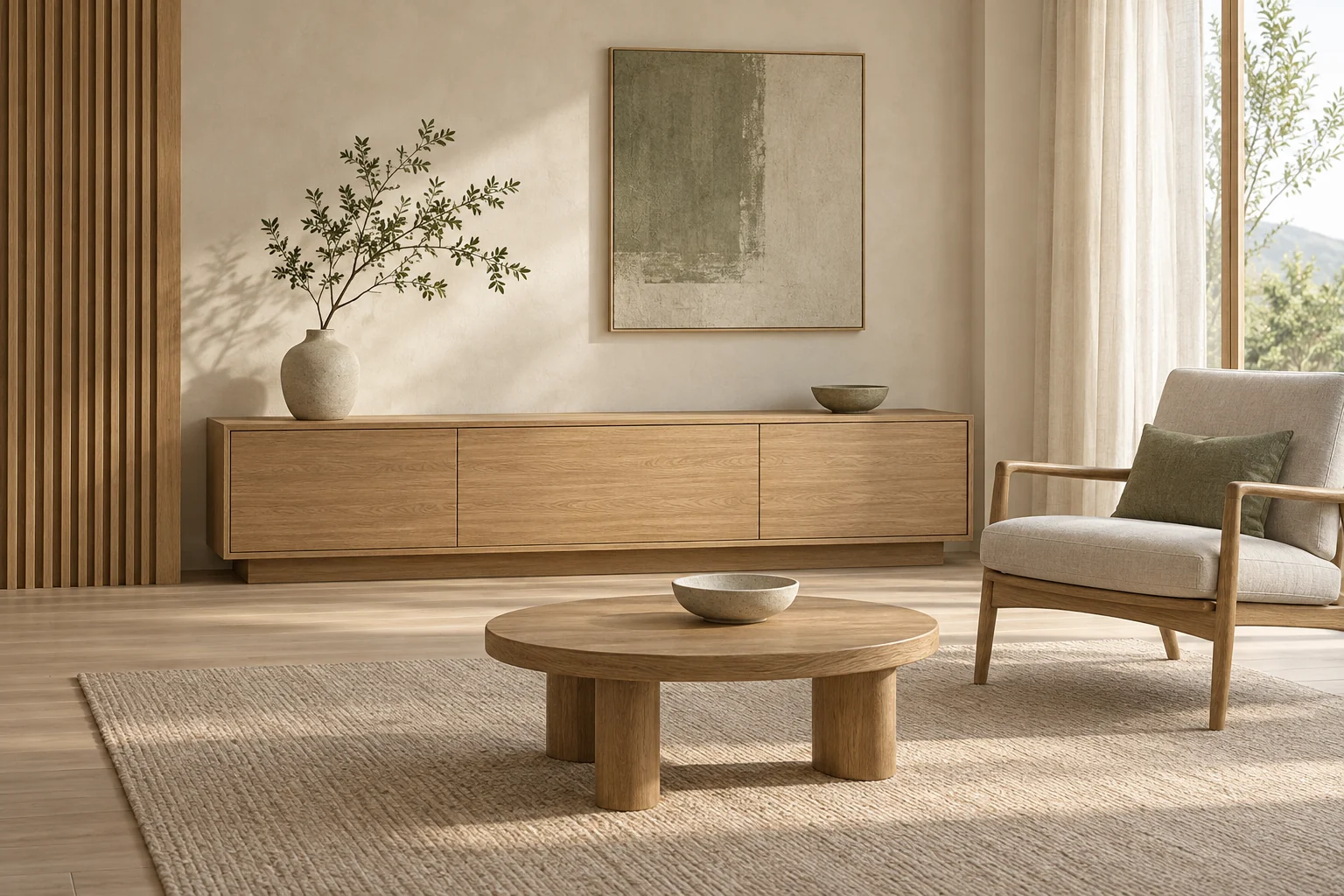
This approach suits people who want a beautiful home without it resembling an exhibition. Japandi is about not only an interior's appearance, but also how we use it.
What is Japandi? Japan meets Scandinavia
The name Japandi combines references to Japan and Scandinavian design. Japanese restraint meets the warmth of northern European interiors. Their common ground is simplicity: fewer objects, practical furnishings and respect for materials.
This does not mean copying a traditional Japanese house or furnishing an apartment solely with Scandinavian furniture. Japandi is a way of combining inspirations, not a rigid set of rules.
The relationship between these design cultures is much older than the term popular today. Designmuseum Danmark documents the influence of Japanese art and craft on Danish design around 1900 and its continuation through the 20th century. The “Learning from Japan” exhibition clearly illustrates these historical connections.
Japandi characteristics — less, with more care
Japandi need not mean an empty beige apartment. Its character is shaped by proportions, textures and consciously chosen objects. Interior designer Cate St Hill highlights the shared interest in craftsmanship, natural materials and simplicity in Japanese and Scandinavian design. Her perspective on Japandi emphasises the rich design traditions behind the fashionable label.
Calm colours and considered contrasts
Warm white, sandy beige, soft grey and earth tones can provide a starting point. To avoid monotony, pair them with darker wood, graphite or a single black detail.
When choosing furniture colours, view samples in the actual room. The same lacquer can look different in daylight and evening lighting.
Materials with their own character
Wood and its grain can be the interior's main decoration. Linen, ceramics, stone or woven material can accompany it. There is no need to use all these materials at once — a few carefully chosen surfaces often work better.
In fitted furniture, distinguish between solid wood, natural veneer and wood-effect decor. They can meet different needs but are not the same material. Your choice should take appearance, budget and conditions of use into account.
Simple forms and balanced details
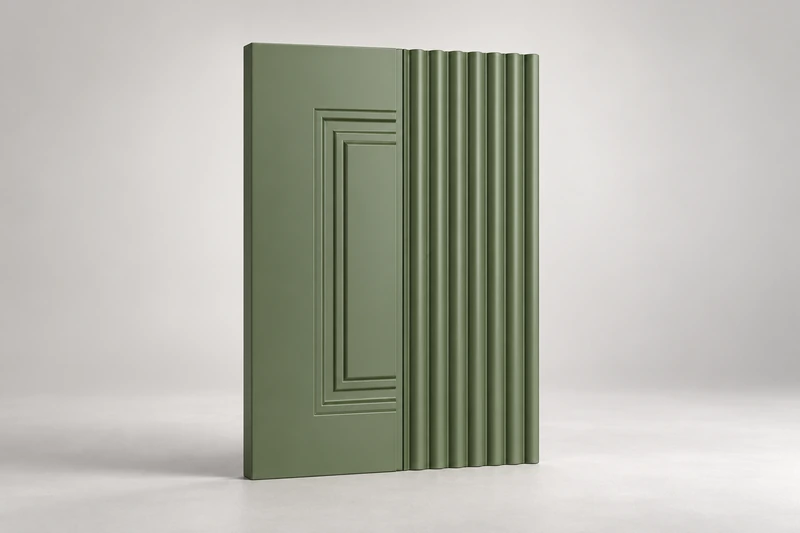
Smooth doors, clear divisions and calm lines help create an orderly composition. Subtle routing or fluting can also suit Japandi if it acts as an accent rather than competing with every other surface.
Handles do not have to disappear at all costs. A well-chosen, comfortable detail can be better than an impressive opening system that does not suit the household.
Why choose a Japandi interior?
This approach's greatest advantage is combining aesthetics with everyday comfort. Reducing visual excess allows the things we truly like to stand out: a beautiful table, favourite ceramics or distinctive wood grain.
Japandi also invites us to consider storage. It is not about appearing to own fewer things, but giving every necessary item a place. A well-planned wardrobe or fitted unit can help maintain order without constantly hiding things from guests.
A calm foundation also offers freedom to change. You can refresh an interior with textiles, artwork or lighting without replacing all the furniture. A lasting result depends primarily on workmanship and sound choices, not the style's name.
Japandi kitchens and bespoke furniture
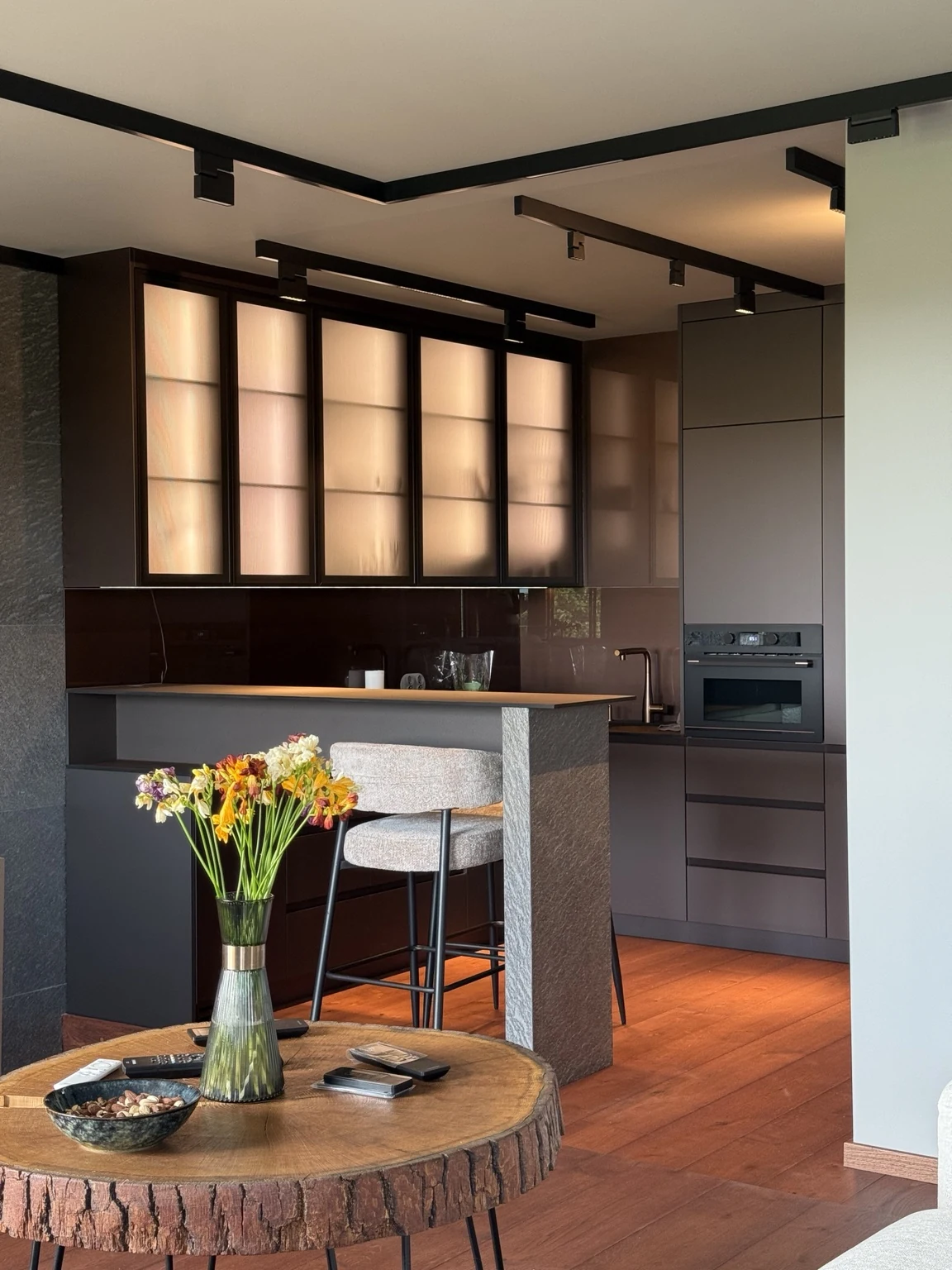
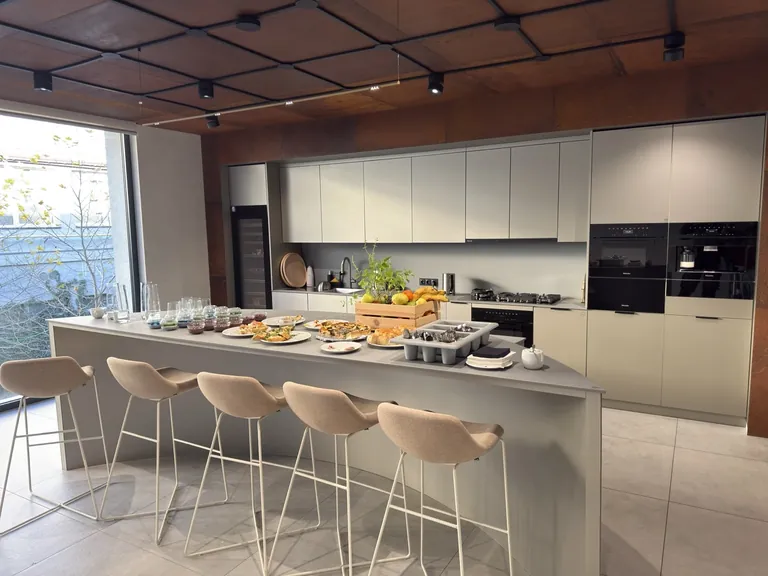
In a Japandi kitchen, appearance should follow function. Before choosing door colours, establish the working layout, appliance spaces and storage arrangements.
One option is to combine matt lacquered doors with natural oak veneer. Another is a calm, single-colour fitted unit with a wooden accent. Open shelving can be limited to a few favourite objects, with other items stored behind doors.
A similar approach works in living rooms and bedrooms. A sideboard, wardrobe or library shelving can form a coherent whole with the interior without repeating an identical finish on every piece.
Bespoke furniture lets you tailor not only dimensions but also divisions and proportions. This is particularly important in minimalist compositions: with fewer decorations, every detail becomes more visible.
Japandi your way — with BK76
At BK76, we design and make bespoke furniture in Wrocław. We can translate Japandi inspiration into a kitchen, wardrobe, sideboard or bespoke fitted unit, tailored to your interior and lifestyle.
An architect's design, a supplied photo, a material sample or a conversation about how you want to live can be the starting point. We can also create a cabinet door from a client's design or supplied inspiration.
You do not need to furnish the entire home under one label. Sometimes a well-designed piece, a calmer colour palette and more room for everyday life are enough.
Have an idea for a Japandi interior? Send us your inspiration — together, we will seek a solution that is not only beautiful, but above all yours.