BK76 guide · Materials
How do you choose cabinet doors?
The short answer: start with how the furniture will be used, then consider colour. Resistance, care, shape, machining possibilities and how the door works with the whole piece all matter.
Start with the conditions of use
We expect different qualities from doors in a heavily used kitchen, a bedroom wardrobe and a reception desk. Consider susceptibility to dirt, cleaning frequency, children or pets, and the risk of exposure to moisture and heat.
Common finish options
Lacquered cabinet doors
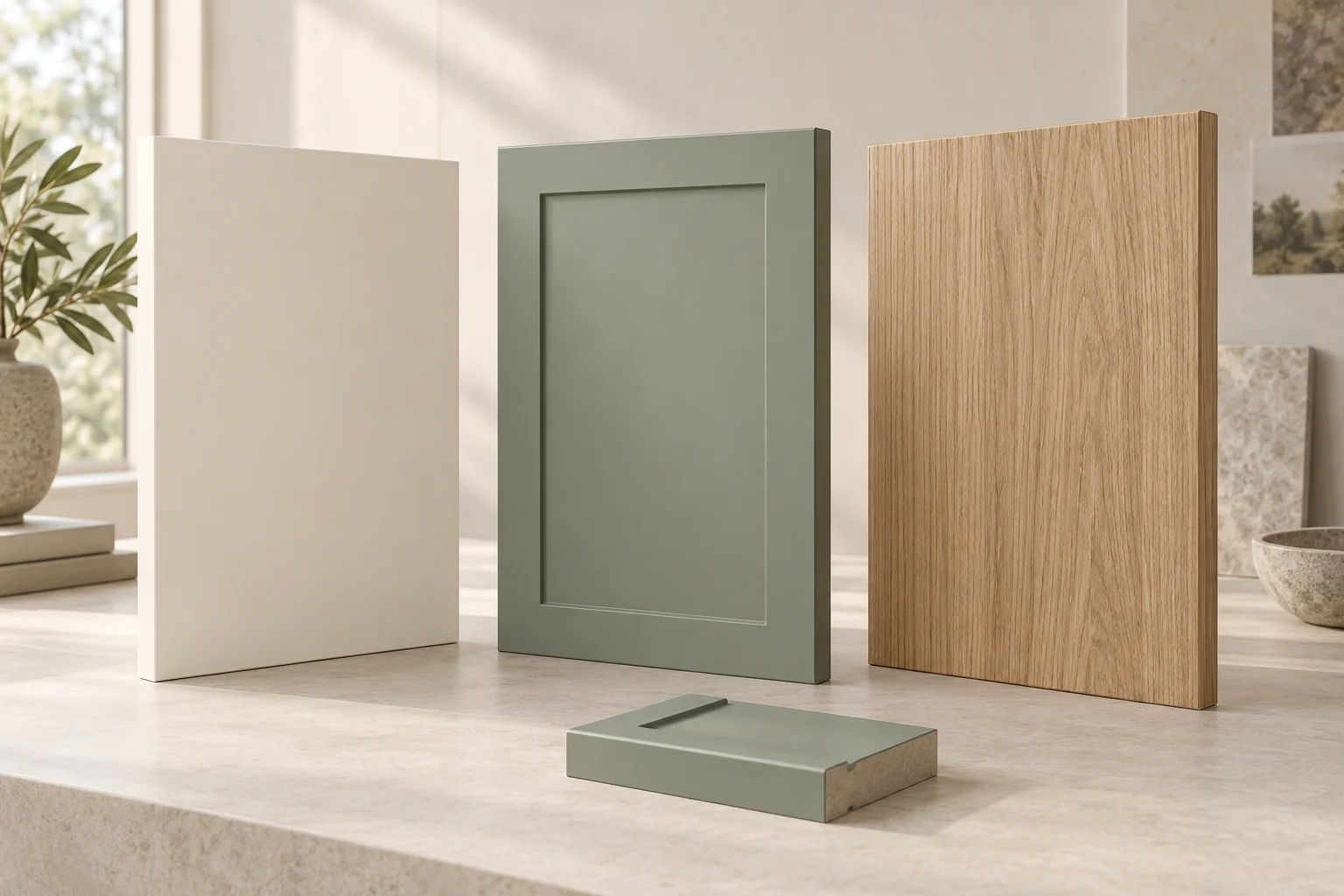
These offer a wide colour choice (over 2,000 colours) and matt or gloss surfaces. They also allow routing and individual shaping, but need appropriate care.
Laminated cabinet doors
These offer many decors and are generally well suited to everyday use. Material quality, edging and corner finishing are important.
Veneered cabinet doors
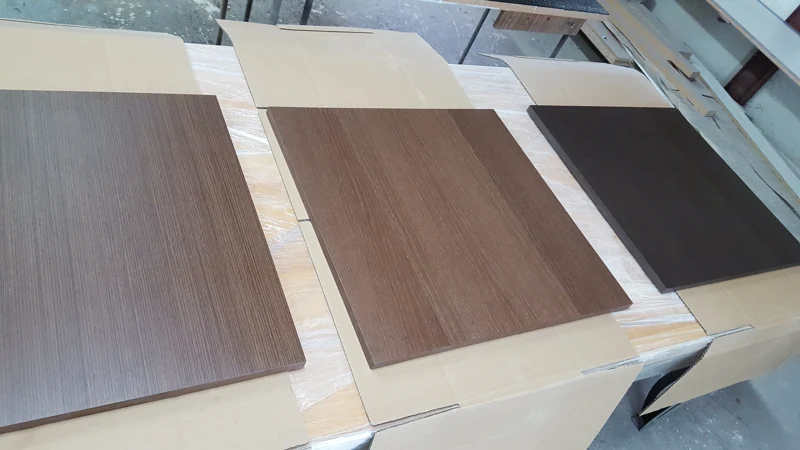
These reveal the natural grain of wood. Individual components may vary in grain and shade — a characteristic of natural material that is worth planning consciously.
Curved and routed cabinet doors
These allow soft corners, curves, routed handles and decorative divisions. The radius, core, thickness and finish need checking before design approval.
Matt, gloss or texture?
Gloss reflects light and strongly mirrors its surroundings. Matt creates a calmer effect, but different surfaces respond differently to touch and cleaning. Texture can emphasise a wood decor. There is no single best answer — the surface should suit its function and the user's expectations.
Five questions before choosing
- How heavily will the furniture be used?
- What matters most: a natural material, a uniform colour or easy care?
- Does the design require routing, bending or a special handle?
- How does the door look in daylight and artificial light?
- Does the chosen material fit the budget for the complete fitted unit?